<?xml version="1.0" encoding="utf-8"?><feed xmlns="http://www.w3.org/2005/Atom" ><generator uri="https://jekyllrb.com/" version="3.9.5">Jekyll</generator><link href="https://strongtownsottawa.ca/feed.xml" rel="self" type="application/atom+xml" /><link href="https://strongtownsottawa.ca/" rel="alternate" type="text/html" /><updated>2026-04-29T15:27:08+00:00</updated><id>https://strongtownsottawa.ca/feed.xml</id><title type="html">Strong Towns Ottawa</title><subtitle>A website for Strong Towns Ottawa</subtitle><entry><title type="html">May Newsletter</title><link href="https://strongtownsottawa.ca/2026/04/29/May-Newsletter.html" rel="alternate" type="text/html" title="May Newsletter" /><published>2026-04-29T00:00:00+00:00</published><updated>2026-04-29T00:00:00+00:00</updated><id>https://strongtownsottawa.ca/2026/04/29/May-Newsletter</id><content type="html" xml:base="https://strongtownsottawa.ca/2026/04/29/May-Newsletter.html"><![CDATA[<iframe id="newsletter-iframe" src="https://eomail5.com/web-version?p=31bf47bc-3358-11f1-810a-29dfb9980132&amp;pt=campaign&amp;t=1777474182&amp;s=518d3209ae780bd043d58f201edf20a859ae22b50d795e2682f6a25611db3a33" width="100%" frameborder="0" style="border: none; background: transparent; display: block;" scrolling="no" onload="resizeIframe(this)"></iframe>

<script>
function resizeIframe(iframe) {
  iframe.style.height = '15360px'; // Desktop-specific adjustment (Always adjust desktop first, once you find the correct height adjust for mobile below)
    setTimeout(function() {
    try {
      // Attempt to get dynamic height (may fail due to cross-origin-resource-sharing limitations)
      const height = iframe.contentWindow.document.body.scrollHeight;
      if (height > 100) { 
        iframe.style.height = height + 'px';
      }
    } catch (e) {
    
      console.log('Could not auto-detect height, using fallback');
    }
  }, 500);

  
  if (window.innerWidth <= 768) {
    iframe.style.height = '22760px'; // Mobile-specific adjustment (Usually 33% bigger than Desktop)
  }
}


function handleResize() {
  const iframe = document.getElementById('newsletter-iframe');
  if (iframe) {
    iframe.style.height = '100px';
    resizeIframe(iframe);
  }
}

window.addEventListener('resize', handleResize);
window.addEventListener('orientationchange', handleResize);
</script>]]></content><author><name>Jill Stothart, Marko Miljusevic, &amp; Etienne Lefebvre</name></author><category term="Newsletter" /><summary type="html"><![CDATA[]]></summary></entry><entry><title type="html">Public Works and Infrastructure Committee (March 30th, 2026) - Brief Summary and Next Steps</title><link href="https://strongtownsottawa.ca/2026/03/31/public-works-and-infrastructure-committee-march-30th-2026-brief-summary-and-next-steps.html" rel="alternate" type="text/html" title="Public Works and Infrastructure Committee (March 30th, 2026) - Brief Summary and Next Steps" /><published>2026-03-31T00:00:00+00:00</published><updated>2026-03-31T00:00:00+00:00</updated><id>https://strongtownsottawa.ca/2026/03/31/public-works-and-infrastructure-committee-march-30th-2026-brief-summary-and-next-steps</id><content type="html" xml:base="https://strongtownsottawa.ca/2026/03/31/public-works-and-infrastructure-committee-march-30th-2026-brief-summary-and-next-steps.html"><![CDATA[<p><em>Photo credit:</em> <a href="https://commons.wikimedia.org/wiki/File:Ottawa_City_Hall,_Ottawa,_Ontario_(30035108356).jpg" title="User:Mindmatrix">Mindmatrix (via Wikimedia Commons)</a></p>

<p>On March 30th, 2026, the Public Works and Infrastructure Committee approved the following items:</p>

<h2 id="sidewalks-in-manor-park"><strong>Sidewalks in Manor Park</strong></h2>

<p>As part of the work related to road, water, and sewer main upgrades, staff proposed that the construction of sidewalks on some of the streets in Manor Park should also be included. </p>

<p>18 delegations were presented on this topic, with two-thirds of them in support. Supporters of this plan made strong points, highlighting pedestrian safety, improved accessibility, and the low cost of building these sidewalks now rather than later. In the end, the committee approved the plan. </p>

<h2 id="bus-lanes-on-bank-street"><strong>Bus Lanes on Bank Street</strong></h2>

<p>The committee approved the following measures:</p>

<ul>
  <li>The designation of the following areas as 24-hour bus-only lanes, replacing just 17 parking spaces:
    <ul>
      <li>Northbound, between Regent Street and Fourth Avenue</li>
      <li>Northbound, south of Aylmer Avenue</li>
      <li>Southbound, between Fourth and Thornton Avenues</li>
      <li>Southbound, between Holmwood Avenue and Wilton Crescent</li>
    </ul>
  </li>
  <li>A pilot project to study bus-only lanes during the following three-hour periods:
    <ul>
      <li>Northbound, from 7 to 10 am</li>
      <li>Southbound, from 3 to 6 pm</li>
    </ul>
  </li>
</ul>

<p>43 delegations were present at the meeting, with two-thirds of them in support. With the variety of perspectives and arguments provided, ranging from improving the reliability of transit service to their economic benefits, we sent a clear message that bus lanes are critical to the success of transit on Bank Street. </p>

<p>We also pushed to make the proposal even bolder by suggesting to make amendments to include bus-only lanes during weekends and event days, increasing the hours during which bus-only lanes would be in effect, making bus-only lanes bidirectional, and pushing the start date of the pilot project to begin in the summer of 2026 instead of 2027. </p>

<p>The proposal was ultimately approved in its current form by the committee, but the fight does not end there.</p>

<h2 id="whats-next"><strong>What’s next?</strong></h2>

<p>These recommendations will now go to the council on <strong>April 8, 2026</strong>, and there are still opportunities to make further amendments. We encourage you to email your councillor to make further improvements to the proposal. </p>

<p>Thank you all for your support during the PWIC meeting. Whether you spread the word during the outreach sessions, wrote to your councilor, or delegated at the meeting, your contributions were valuable. We would not have made it this far without you all!</p>

<p>The pilot is supposed to begin during the summer of next year and run for 12 months afterwards. We will be keeping a close eye on the pilot and making sure we are out in full force again when it comes to analyzing the data from the pilot and advocating for further recommendations. We will also be looking into documenting people’s experiences during the pilot. If you are interested in getting involved with any of this, don’t hesitate to reach out and get involved!</p>]]></content><author><name>Strong Towns Ottawa</name></author><category term="Transit" /><summary type="html"><![CDATA[Photo credit: Mindmatrix (via Wikimedia Commons)]]></summary></entry><entry><title type="html">Our Letter To City Council On Dedicated Bus Lanes For Bank Street</title><link href="https://strongtownsottawa.ca/2026/03/24/open-letter-bus-lanes-on-bank-street.html" rel="alternate" type="text/html" title="Our Letter To City Council On Dedicated Bus Lanes For Bank Street" /><published>2026-03-24T00:00:00+00:00</published><updated>2026-03-24T00:00:00+00:00</updated><id>https://strongtownsottawa.ca/2026/03/24/open-letter-bus-lanes-on-bank-street</id><content type="html" xml:base="https://strongtownsottawa.ca/2026/03/24/open-letter-bus-lanes-on-bank-street.html"><![CDATA[<div style="text-align: center; margin: 20px 0;">
  <img src="/assets/img/logo3.png" style="width: 200px; height: auto; object-fit: contain;" />
</div>

<p><strong>Below is the letter</strong> we sent to the Public Works and Infrastructure Committee ahead of their <a href="https://pub-ottawa.escribemeetings.com/Meeting.aspx?Id=a4925cf6-8d54-4bfe-adb0-6db93971cc2e&amp;Agenda=Agenda&amp;lang=English">March 30th vote</a> on dedicated bus lanes for Bank Street.</p>

<hr />
<p>Dear Chair Tierney and Members of the Public Works and Infrastructure Committee,</p>

<p>On March 30th, you will vote on the future of bus lanes on Bank Street, Ottawa’s busiest transit corridor serving routes 6 and 7. This vote will also shape the future of transportation planning in this city. <strong>We are writing to urge you to amend the current proposal to deliver a pilot that is ambitious enough to produce meaningful results</strong>, results that can be used to improve our transportation system as a whole.</p>

<p><strong>Ottawa’s transit system is in crisis.</strong> Bus cancellations continue to climb, ridership remains below where it needs to be, and residents across the city are understandably losing confidence in public transit as a viable option. This committee has a real opportunity to take a concrete step toward reversing that trend. Bank Street is the right place to start, and the data supports going further than what staff have proposed.</p>

<p>The current proposal prioritizes the preservation of on-street parking, despite data from both the City of Ottawa and the Glebe BIA confirming that sufficient parking exists in the area. With such limited space on such an important street, preserving the on-street parking makes no sense. Bank Street will never compete with big box stores and strip malls on parking availability. We need to be smarter with the limited space we have. This same debate plays out in cities around the world, whether in European cities like Paris or Utrecht, or North American ones such as New York, Montreal, or Toronto. Yet time and again, cities that have reclaimed their public space from private vehicle parking have seen benefits for the vast majority of people – including local businesses.</p>

<p>We are asking this committee to amend the current proposal in four ways:</p>

<p><strong>1. Implement the pilot by summer of 2026, not 2027</strong><br />
The current timeline would not produce any usable data until late into 2028. A simple pilot project, paint and signage, should not take over a year to launch. Our transit crisis is getting worse, not better. <strong>Every month of delay is another month of unreliable service</strong> for the tens of thousands of weekly transit riders who depend on this corridor.</p>

<p><strong>2. Extend dedicated bus lanes to weekends and during events</strong><br />
The city’s own staff report shows that delays during major events at Lansdowne reach 18 minutes, over <strong>3x</strong> the regular trip time for this corridor, and that <strong>transit usage is highest during events</strong>. Weekends also see some of the largest delays on Bank Street. Despite this, the current proposal excludes both weekend and event-day operations. This is a decision that contradicts the city’s own findings.</p>

<p><strong>3. Operate bus lanes in both directions simultaneously</strong><br />
The assumption that transit riders follow the same directional patterns as car commuters (northbound in the morning, southbound in the evening) is contradicted by the city’s own ridership data. Students going to Carleton, elderly residents going to appointments, shift workers, shoppers, event goers, frontline staff who make the unique retail in the Glebe possible all travel outside of peak hours and in both directions. <strong>The current one-direction approach leaves them behind.</strong></p>

<p><strong>4. Expand bus lane hours, 24/7 is ideal, 6am-6pm at minimum</strong><br />
Delays occur throughout the whole day, not just during traditional peak hours. The staff report confirms that the <strong>delays are the largest when parking is in place</strong>, and ridership data for routes 6 and 7 does not follow typical 9-to-5 commuting patterns. Part-time dedicated bus lanes also create confusion and reduce compliance. In our canvassing, residents consistently told us the <strong>existing parking rules in the Glebe are already confusing</strong>; adding another time-based condition will only make things worse. Staff also confirmed that the current two hour travel lanes suffer from parked vehicles encroaching in the lanes, undermining their effectiveness. This is why 24/7 dedicated bus lanes are the gold standard in cities around the world.</p>

<p><strong>This position is not ours alone.</strong> Over the course of our campaign, we have canvassed hundreds of residents who expressed emphatic support for dedicated bus lanes, and more than 550 have signed our petition. Support for dedicated bus lanes on Bank Street is also endorsed by the Centretown Community Association, the Dalhousie Community Association, the Manor Park Community Association, Free Transit Ottawa, Better Transit Ottawa, The Amalgamated Transit Union Local 279, CAFES, and Ecology Ottawa, and many small businesses on Bank Street itself.</p>

<p>The city’s own staff report supports every one of these asks. We are not asking you to go against expert advice, we are asking you to follow it. A weak pilot with limited hours, one-direction operations, and a 2027 start date is not designed for success. It’s designed to produce inconclusive data that will be used to justify abandoning bus lanes altogether. If this committee wants to know whether bus lanes work on Bank Street, it must give them a fair chance.</p>

<p>Ottawa residents are paying attention. Transportation is shaping up to be a defining issue heading into the 2026 municipal election. We hope Councillors will seize this opportunity to show residents that bold, evidence-based action on transit is possible.</p>

<p>Sincerely,<br />
<strong>The Board of Directors,</strong><br />
<strong>Strong Towns Ottawa</strong><br />
<em>March 24th, 2026</em></p>]]></content><author><name></name></author><category term="Letters" /><category term="Transit" /><summary type="html"><![CDATA[]]></summary></entry><entry><title type="html">The Final Push For Bus Lanes On Bank Street!</title><link href="https://strongtownsottawa.ca/2026/03/23/final-push-for-bus-lanes-on-bank-street.html" rel="alternate" type="text/html" title="The Final Push For Bus Lanes On Bank Street!" /><published>2026-03-23T00:00:00+00:00</published><updated>2026-03-23T00:00:00+00:00</updated><id>https://strongtownsottawa.ca/2026/03/23/final-push-for-bus-lanes-on-bank-street</id><content type="html" xml:base="https://strongtownsottawa.ca/2026/03/23/final-push-for-bus-lanes-on-bank-street.html"><![CDATA[<style>
.action-alert-container {
  max-width: 800px;
  margin: 0 auto;
  line-height: 1.7;
  color: #333;
}

.action-alert-body {
  font-size: 1.1rem;
}

.action-alert-body p {
  margin-bottom: 1.5rem;
}

.drop-cap {
  font-weight: bold;
  color: #0C2340;
  float: left;
  font-size: 5em;
  line-height: 0.8;
  margin-right: 0.05em;
  padding-right: 0.1em;
}

@media (max-width: 768px) {
  .drop-cap {
    font-size: 4em;
  }
}

.action-alert-body strong {
  color: #0C2340;
  font-weight: 600;
}

.action-alert-body a {
  color: #623a00;
  text-decoration: underline;
}

.action-alert-body a:hover {
  color: #0C2340;
}

/* Section headers for the four asks */
.ask-section {
  margin: 2.5rem 0;
  padding: 0;
}

.ask-section-title {
  font-size: 1.4rem;
  font-weight: 700;
  color: #0C2340;
  margin-bottom: 1rem;
  padding-bottom: 0.5rem;
  border-bottom: 2px solid #ffb549;
  text-align: center;
}

/* Momentum section */
.momentum-section {
  background: linear-gradient(to right, rgba(255, 181, 73, 0.15), rgba(255, 181, 73, 0.05));
  padding: 2rem;
  border-radius: 8px;
  margin: 2.5rem 0;
  border-left: 4px solid #ffb549;
}

.momentum-section h3 {
  color: #0C2340;
  margin-top: 0;
  margin-bottom: 1rem;
  font-size: 1.4rem;
}

.momentum-section ul {
  list-style: none;
  padding-left: 0;
  margin-bottom: 0;
}

.momentum-section ul li {
  padding: 0.3rem 0;
  padding-left: 1.2rem;
  position: relative;
}

.momentum-section ul li::before {
  content: "✓";
  position: absolute;
  left: 0;
  color: #0C2340;
  font-weight: bold;
}

/* Get Involved header */
.get-involved-header {
  font-size: 1.8rem;
  font-weight: 700;
  color: #0C2340;
  text-align: center;
  margin: 3rem 0 1.5rem;
  padding-bottom: 0.75rem;
  border-bottom: 3px solid #ffb549;
}

/* Two-column grid */
.two-col-grid {
  display: grid;
  grid-template-columns: 1fr 1fr;
  gap: 2rem;
  margin: 2rem 0;
}

@media (max-width: 768px) {
  .two-col-grid {
    grid-template-columns: 1fr;
    gap: 1.5rem;
  }
}

.involvement-card {
  background: #fff;
  border: 1px solid #e0e0e0;
  border-radius: 8px;
  padding: 1.75rem;
  display: flex;
  flex-direction: column;
  text-align: center;
}

.involvement-card h3 {
  font-size: 1.2rem;
  font-weight: 700;
  color: #0C2340;
  margin-top: 0;
  margin-bottom: 1rem;
}

.involvement-card p {
  font-size: 0.95rem;
  line-height: 1.5;
  color: #444;
  flex-grow: 1;
  text-align: left;
  margin-bottom: 1.25rem;
}

.involvement-card .deadline-item {
  text-align: left;
  margin-bottom: 0.75rem;
}

.involvement-card .deadline-item strong {
  display: block;
  color: #0C2340;
  font-size: 0.95rem;
}

.involvement-card .deadline-item span {
  font-size: 0.9rem;
  color: #555;
}

.involvement-card .registration-note {
  text-align: left;
  font-size: 0.9rem;
  color: #555;
  margin-top: 0.5rem;
  margin-bottom: 1.25rem;
  flex-grow: 1;
}

.involvement-card .registration-note em {
  font-style: italic;
  color: #666;
}

/* CTA button */
.cta-button {
  display: inline-block;
  background-color: #ffb549;
  color: #0C2340;
  font-weight: 700;
  font-size: 1rem;
  padding: 0.85rem 1.5rem;
  border-radius: 8px;
  text-decoration: none;
  text-align: center;
  transition: background-color 0.2s ease, transform 0.1s ease;
  margin-top: auto;
  letter-spacing: -0.3px;
}

.cta-button:hover {
  background-color: #e6a03e;
  color: #0C2340;
  text-decoration: none;
  transform: translateY(-1px);
}

/* Urgency callout */
.urgency-callout {
  background-color: #0C2340;
  color: #fff;
  padding: 1.5rem 2rem;
  border-radius: 8px;
  text-align: center;
  margin: 2rem 0;
  font-size: 1.05rem;
  line-height: 1.5;
}

.urgency-callout strong {
  color: #ffb549;
}

.urgency-callout a {
  color: #ffb549;
  text-decoration: underline;
}

/* Image caption */
.image-caption {
  text-align: right;
  font-size: 0.85rem;
  color: #777;
  font-style: italic;
  margin-top: 0.25rem;
  margin-bottom: 2rem;
}

/* Responsive */
@media (max-width: 480px) {
  .action-alert-body {
    font-size: 1.05rem;
  }

  .ask-section-title {
    font-size: 1.2rem;
  }

  .get-involved-header {
    font-size: 1.5rem;
  }

  .involvement-card {
    padding: 1.25rem;
  }

  .cta-button {
    width: 100%;
    box-sizing: border-box;
  }

  .urgency-callout {
    padding: 1.25rem;
    font-size: 1rem;
  }
}
</style>

<div class="action-alert-body">

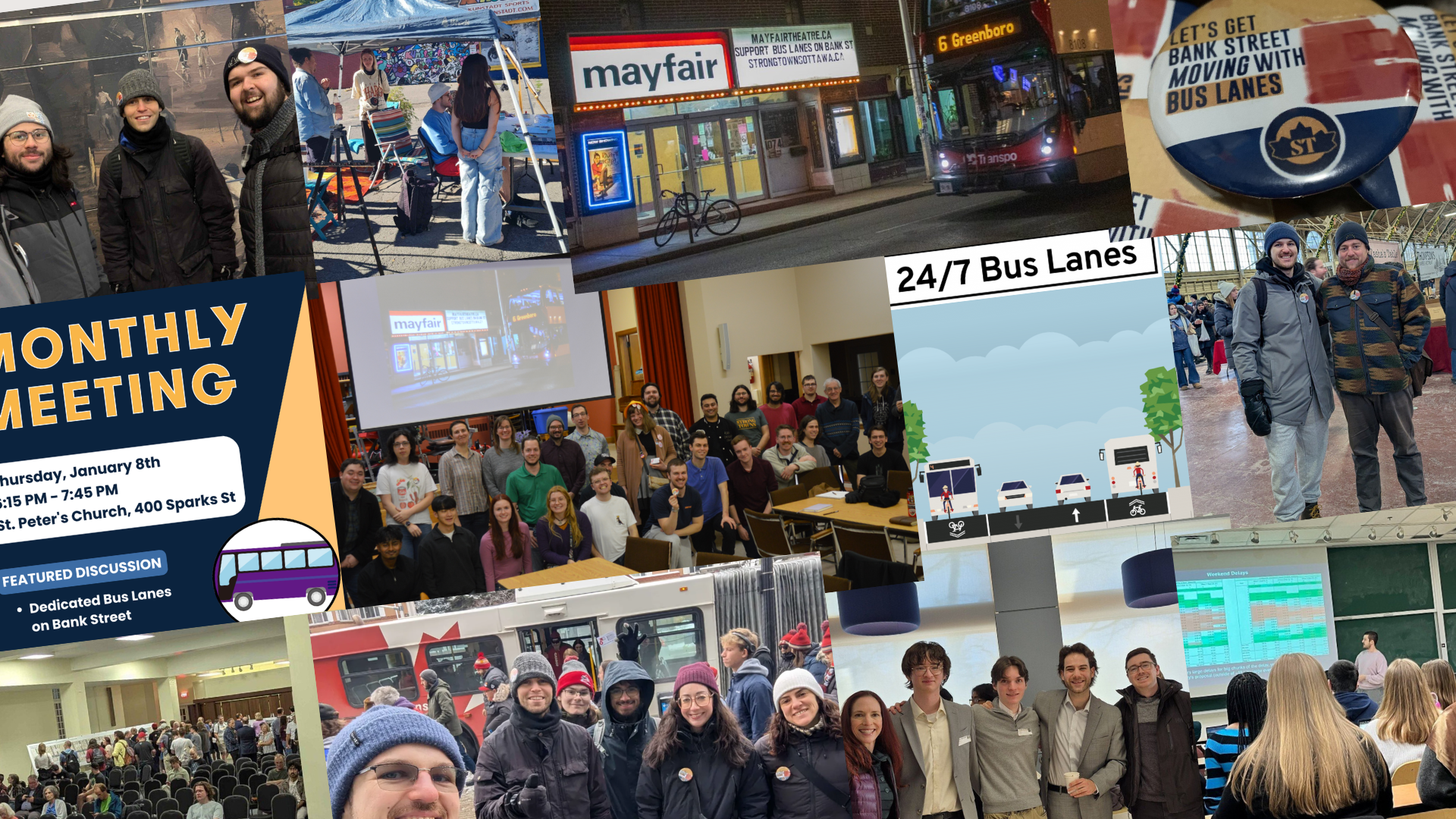
  <p><span class="drop-cap">A</span>fter years of advocacy, the moment we've been working towards is finally here. When we held our first parking protest back in July of 2024, we never could have imagined how many hundreds of supportive citizens would be standing beside us years later, fighting for a more reliable transportation system in Ottawa. Thank you to everyone who has helped us out, from sharing the campaign with friends, to helping with our numerous outreach efforts, to pooling money <a href="https://capitalcurrent.ca/groups-call-for-24-hour-bus-lanes-along-bank-to-ease-congestion-improve-safety/">to buy ads at the Mayfair</a>, to combing through tons of data, studies, and reports, to even just following along with the effort we've been putting in. Every single person has played a part in getting this study to where it currently is.</p>

  <div style="margin: 2rem 0;">
    <img src="/assets/img/bus_lane_photo_collage.png" alt="Image collage showing a small collection of our dedicated bus lane campaign events" style="width: 100%; height: auto; border-radius: 6px;" />
    <p class="image-caption">Image collage showing a small collection of our dedicated bus lane campaign events</p>
  </div>

  <div class="urgency-callout">
    On <strong>March 30th</strong>, City of Ottawa staff will be presenting their recommendations for bus lanes on Bank Street at the <a href="https://pub-ottawa.escribemeetings.com/Meeting.aspx?Id=a4925cf6-8d54-4bfe-adb0-6db93971cc2e&amp;Agenda=Agenda&amp;lang=English">Public Works and Infrastructure Committee (PWIC) meeting</a>. This is the meeting where councillors will decide what kind of bus lanes will be piloted on Bank Street. If we don't show up, we risk the weaker proposal passing unchallenged, or worse, bus lanes being voted down entirely.
  </div>

  <p>Councillors have told us directly that hearing from residents greatly influences their vote. Many Strong Towns Ottawa members have already signed up to delegate, so please consider joining them and helping us push for a better, bolder vision for Bank Street! If you want to delegate, check out the links further down for more info.</p>

  <p>The city's proposal can be found <a href="https://pub-ottawa.escribemeetings.com/filestream.ashx?DocumentId=301023">here</a>. If you're not familiar with Bank Street, it is a four lane road: two inner lanes for general travel, and the two outer lanes used for parking, except during "peak" hours, when the northbound parking lane (7-9 am), and the southbound parking lane (3:30-5:30pm) open up as additional travel lanes. Under the new proposal, those outer lanes would become bus lanes during "peak hours" instead. The city would also add four small 24/7 sections near Lansdowne, replacing 17 parking spots, and has expanded on the September open house proposal by adding an hour in both the morning and evening peak to study the effects it has on improving transit when parking is removed on each side. This is certainly better than previous proposals, and it shows that our efforts have an impact, but we need to keep pushing.</p>

  <div class="ask-section">
    <h3 class="ask-section-title">We Need Bus Lanes ASAP</h3>
    <p>The city's plan would take until the summer of 2027 to begin, and until 2028 for us to see any data produced from the pilot. The transit crisis we are facing has only gotten worse. We cannot keep delaying solutions longer and longer. A simple pilot project like this should be implemented as soon as possible to study the benefits. <strong>We urge the city to implement the lanes this summer, to help with our transit crisis as soon as possible.</strong></p>
  </div>

  <div class="ask-section">
    <h3 class="ask-section-title">We Need Bus Lanes On Weekends &amp; During Events</h3>
    <p><a href="https://strongtownsottawa.ca/2025/09/25/the-city-needs-to-be-bold-with-bank.html">At a previous open house</a>, the city said they would be putting in bus lanes during events, and according to their report, large events are the busiest for Bank Street and have the most amount of people using transit. Yet, they walked back their large events proposal for unknown reasons. Weekends are also the time when buses on Bank Street are delayed the most. Riders deserve to be able to get to where they're going in a timely manner, even if they're travelling on a weekend. <strong>We urge the city to have bus lanes running during weekends, and especially during events at Lansdowne.</strong></p>
  </div>

  <div class="ask-section">
    <h3 class="ask-section-title">We Need 24/7 Dedicated Bus Lanes</h3>
    <p>Having bus lanes for only a couple hours in the morning and evening will lead to people mistakenly leaving their cars in the travel lanes, as they are not aware of the rules at the time. In our canvassing, we often heard that the existing parking rules in the Glebe were confusing; adding another condition would only make things more confusing. This is why 24/7 dedicated bus lanes are an urban planning gold standard around the world. But for this pilot, even having a standardized longer period for the bus lanes to operate would undoubtedly increase compliance and help make them more efficient and effective. <strong>At the very least, we urge the city to extend the hours of bus lanes to 6 am - 6 pm, the hours when we see the largest bus delays.</strong></p>
  </div>

  <div class="ask-section">
    <h3 class="ask-section-title">We Need Bus Lanes In Each Direction</h3>
    <p>Bus lanes that operate only in the "peak" directions (northbound in the morning, and southbound in the evening) are based on assumptions that transit riders follow the same travel patterns as car drivers: an assumption that city data shows is mistaken. Much of the usage of transit in this corridor happens outside of peak hours. Students going to Carleton, elderly residents taking the bus to appointments, shift workers who work at different times, shoppers, event goers, the frontline staff we spoke to who make the unique retail in the Glebe possible, and everyone else travelling outside of regular 9-5 hours is being punished by the current proposal. <strong>We urge the city to operate the bus lanes in each direction at the same time.</strong></p>
  </div>

  <div class="momentum-section">
    <h3>You're Not Alone, Momentum Is Building</h3>
    <p>We're not alone in this fight. Over the course of our campaign, hundreds of residents we've canvassed expressed support for dedicated bus lanes, and more than <strong>550 have signed our petition</strong>. On top of that, multiple community associations and advocacy organizations have already expressed their support for dedicated bus lanes on Bank Street:</p>
    <ul>
      <li><a href="https://drive.google.com/file/d/1n6PPpPM9iT5Bha6qNwNdh8hk0F4I12px/view?usp=drive_link">Centretown Community Association</a></li>
      <li><a href="https://drive.google.com/file/d/1mO2aOSdbiS-rcCqDX8mzYdB1SvIHAUM4/view?usp=sharing">Dalhousie Community Association</a></li>
      <li><a href="https://drive.google.com/file/d/1437brJDMJMeVfiTFchttJn4BsTKpN12l/view">Manor Park Community Association</a></li>
      <li><a href="https://freetransitottawa.ca/bank-street-is-a-transit-corridor-lets-treat-it-like-one/">Free Transit Ottawa</a></li>
      <li><a href="https://bettertransitottawa.ca/blog/bank-bus-lanes">Better Transit Ottawa</a></li>
      <li>Amalgamated Transit Union 279</li>
      <li>Ottawa Transit Riders</li>
      <li>CAFES</li>
      <li>Ecology Ottawa</li>
    </ul>
  </div>

  <h2 class="get-involved-header">How To Get Involved</h2>

  <div class="two-col-grid">
    <div class="involvement-card">
      <h3>What Is A Delegation?</h3>
      <p>A delegation is an opportunity to speak before one of several city council committees. You get five minutes to speak about a specific item on the agenda. You can delegate in person at City Hall or online using Zoom. If you are able to, try to delegate in person, as in-person delegations tend to be more impactful. You don't need to recite your speech from memory; many people simply write out their delegation speech and read it out loud. You are also allowed to submit a slide deck to align with your delegation, but this is not necessary.</p>
      <a href="https://docs.google.com/document/d/15kDxgOVO4SxuUHfMbHy2YjtXLv4YK0L_5dJvoNF2vyg/edit?tab=t.baq259c7n3yw#heading=h.73nit173amek" class="cta-button">Read Our Delegation Guide</a>
    </div>
    <div class="involvement-card">
      <h3>Delegation Deadlines</h3>
      <div class="deadline-item">
        <strong>Friday, March 27 at 4:00 PM</strong>
        <span>Deadline to register if you plan to use a slide deck (you must attach your slide deck in the registration email).</span>
      </div>
      <div class="deadline-item">
        <strong>Monday, March 30 at 8:30 AM</strong>
        <span>Deadline to register if you don't plan to use a slide deck.</span>
      </div>
      <p class="registration-note">To register, email the committee coordinator at <a href="mailto:marcela.busnardodossantos@ottawa.ca">marcela.busnardodossantos@ottawa.ca</a> with: <em>"I would like to sign up to delegate on item 5.2 Bank Street Active Transportation and Transit Priority Feasibility Study, for the March 30th PWIC meeting. Thanks!"</em></p>
      <a href="https://pub-ottawa.escribemeetings.com/Meeting.aspx?Id=a4925cf6-8d54-4bfe-adb0-6db93971cc2e&amp;Agenda=Agenda&amp;lang=English" class="cta-button">Read Meeting Agenda</a>
    </div>
  </div>

  <div class="two-col-grid">
    <div class="involvement-card">
      <h3>Need Help With Your Delegation?</h3>
      <p>Join our Discord and head to the <strong>#bank-street-bus-bike-lanes</strong> channel, where members are brainstorming ideas and helping each other write delegation scripts. You can also email us at <a href="mailto:hello@strongtownsottawa.ca">hello@strongtownsottawa.ca</a> with any question you might have!</p>
      <a href="https://discord.gg/kHaVNgrcsG" class="cta-button">Join Us On Discord</a>
    </div>
    <div class="involvement-card">
      <h3>Don't Have Time To Delegate?</h3>
      <p>Please consider using our email template below to send an email to your councillor in support of dedicated bus lanes on Bank Street. It takes less than two minutes!</p>
      <a href="https://strongtownsottawa.ca/bank_street_email_template/" class="cta-button">Email Your Councillor Using Our Template</a>
    </div>
  </div>

</div>]]></content><author><name>Strong Towns Ottawa</name></author><category term="Newsletter" /><category term="Transit" /><summary type="html"><![CDATA[]]></summary></entry><entry><title type="html">March Newsletter</title><link href="https://strongtownsottawa.ca/2026/03/09/March-Newsletter.html" rel="alternate" type="text/html" title="March Newsletter" /><published>2026-03-09T00:00:00+00:00</published><updated>2026-03-09T00:00:00+00:00</updated><id>https://strongtownsottawa.ca/2026/03/09/March-Newsletter</id><content type="html" xml:base="https://strongtownsottawa.ca/2026/03/09/March-Newsletter.html"><![CDATA[<iframe id="newsletter-iframe" src="https://eomail5.com/web-version?p=742f79b8-18c4-11f1-aca0-67cd52055a42&amp;pt=campaign&amp;t=1773061332&amp;s=e77f30eb6ac9aceb0af38ca849a278a092456db04002da31369a6b599090b699" width="100%" frameborder="0" style="border: none; background: transparent; display: block;" scrolling="no" onload="resizeIframe(this)"></iframe>

<script>
function resizeIframe(iframe) {
  iframe.style.height = '7550px'; // Desktop-specific adjustment (Always adjust desktop first, once you find the correct height adjust for mobile below)
    setTimeout(function() {
    try {
      // Attempt to get dynamic height (may fail due to cross-origin-resource-sharing limitations)
      const height = iframe.contentWindow.document.body.scrollHeight;
      if (height > 100) { 
        iframe.style.height = height + 'px';
      }
    } catch (e) {
    
      console.log('Could not auto-detect height, using fallback');
    }
  }, 500);

  
  if (window.innerWidth <= 768) {
    iframe.style.height = '10800px'; // Mobile-specific adjustment (Usually 33% bigger than Desktop)
  }
}


function handleResize() {
  const iframe = document.getElementById('newsletter-iframe');
  if (iframe) {
    iframe.style.height = '100px';
    resizeIframe(iframe);
  }
}

window.addEventListener('resize', handleResize);
window.addEventListener('orientationchange', handleResize);
</script>]]></content><author><name>Etienne Lefebvre</name></author><category term="Newsletter" /><summary type="html"><![CDATA[]]></summary></entry><entry><title type="html">February Newsletter</title><link href="https://strongtownsottawa.ca/2026/02/10/February-Newsletter.html" rel="alternate" type="text/html" title="February Newsletter" /><published>2026-02-10T00:00:00+00:00</published><updated>2026-02-10T00:00:00+00:00</updated><id>https://strongtownsottawa.ca/2026/02/10/February-Newsletter</id><content type="html" xml:base="https://strongtownsottawa.ca/2026/02/10/February-Newsletter.html"><![CDATA[<iframe id="newsletter-iframe" src="https://eomail5.com/web-version?p=2428002e-ee6d-11f0-b1be-896fb6a599d6&amp;pt=campaign&amp;t=1770732093&amp;s=1fcc912563d38bc69c1873c3b54c3128a60640a56fafd5e9f88c4edbc7e70738" width="100%" frameborder="0" style="border: none; background: transparent; display: block;" scrolling="no" onload="resizeIframe(this)"></iframe>

<script>
function resizeIframe(iframe) {
  iframe.style.height = '9550px'; // Desktop-specific adjustment (Always adjust desktop first, once you find the correct height adjust for mobile below)
    setTimeout(function() {
    try {
      // Attempt to get dynamic height (may fail due to cross-origin-resource-sharing limitations)
      const height = iframe.contentWindow.document.body.scrollHeight;
      if (height > 100) { 
        iframe.style.height = height + 'px';
      }
    } catch (e) {
    
      console.log('Could not auto-detect height, using fallback');
    }
  }, 500);

  
  if (window.innerWidth <= 768) {
    iframe.style.height = '12800px'; // Mobile-specific adjustment (Usually 33% bigger than Desktop)
  }
}


function handleResize() {
  const iframe = document.getElementById('newsletter-iframe');
  if (iframe) {
    iframe.style.height = '100px';
    resizeIframe(iframe);
  }
}

window.addEventListener('resize', handleResize);
window.addEventListener('orientationchange', handleResize);
</script>]]></content><author><name>Etienne Lefebvre</name></author><category term="Newsletter" /><summary type="html"><![CDATA[]]></summary></entry><entry><title type="html">Sussex, Beechwood and who gets to belong</title><link href="https://strongtownsottawa.ca/2026/01/30/sussex-beechwood-and-who-gets-to-belong.html" rel="alternate" type="text/html" title="Sussex, Beechwood and who gets to belong" /><published>2026-01-30T00:00:00+00:00</published><updated>2026-01-30T00:00:00+00:00</updated><id>https://strongtownsottawa.ca/2026/01/30/sussex-beechwood-and-who-gets-to-belong</id><content type="html" xml:base="https://strongtownsottawa.ca/2026/01/30/sussex-beechwood-and-who-gets-to-belong.html"><![CDATA[<style>
.op-ed-container {
  max-width: 800px;
  margin: 0 auto;
  line-height: 1.7;
  color: #333;
}
.author-bio {
  background: linear-gradient(to right, rgba(52, 152, 219, 0.1), rgba(52, 152, 219, 0.05));
  padding: 1.5rem;
  border-radius: 8px;
  margin-bottom: 0 !important;
  font-size: 0.95rem;
  border-left: 4px solid #0C2340;
  color: #555;
}

.op-ed-header {
  border-bottom: 2px solid #e0e0e0;
  padding-bottom: 2rem;
  margin-bottom: 3rem;
}

.op-ed-title {
  font-size: 2.5rem;
  font-weight: 700;
  line-height: 1.2;
  color: #222;
  margin-bottom: 0.5rem;
}

.op-ed-subtitle {
  font-size: 1.3rem;
  font-weight: 400;
  color: #666;
  margin-bottom: 1.5rem;
  font-style: italic;
}

.op-ed-meta {
  display: flex;
  flex-wrap: wrap;
  gap: 1.5rem;
  font-size: 0.95rem;
  color: #666;
  margin-bottom: 2rem;
}

.op-ed-author {
  font-weight: 600;
  color: #444;
}

.op-ed-date {
  font-style: italic;
}

.op-ed-disclaimer {
  background: #f8f9fa;
  border-left: 4px solid #3498db;
  padding: 1.25rem;
  margin: 2rem 0;
  font-size: 0.95rem;
  color: #555;
  border-radius: 0 4px 4px 0;
}

.op-ed-body {
  font-size: 1.1rem;
}

.op-ed-body p {
  margin-bottom: 1.5rem;
  text-align: justify;
}

.author-bio p {
  margin-bottom: 0 !important;
}

.drop-cap {
  font-weight: bold;
  color: #2c3e50;
  float: left;
  font-size: 5em;
  line-height: 0.8;
  margin-right: 0.05em;
  padding-right: 0.1em;
}

@media (max-width: 768px) {
  .drop-cap {
    font-size: 4em;
  }
}

.op-ed-body strong {
  color: #2c3e50;
  font-weight: 600;
}

.op-ed-quote {
  border-left: 3px solid #3498db;
  padding-left: 1.5rem;
  margin: 2.5rem 1.5rem;
  font-style: italic;
  color: #444;
  font-size: 1.2rem;
  line-height: 1.6;
}

.op-ed-section {
  margin: 3rem 0;
}

.op-ed-section-title {
  font-size: 1.4rem;
  font-weight: 600;
  color: #2c3e50;
  margin-bottom: 1.5rem;
  padding-bottom: 0.5rem;
  border-bottom: 1px solid #eaeaea;
}

.op-ed-conclusion {
  background: linear-gradient(to right, rgba(52, 152, 219, 0.1), rgba(52, 152, 219, 0.05));
  padding: 2rem;
  border-radius: 8px;
  margin: 3rem 0;
  border-left: 4px solid #3498db;
}

.op-ed-conclusion p:last-child {
  margin-bottom: 0;
  font-weight: 600;
  color: #2c3e50;
}

.op-ed-tags {
  display: flex;
  flex-wrap: wrap;
  gap: 0.5rem;
  margin-top: 3rem;
  padding-top: 2rem;
  border-top: 1px solid #eaeaea;
}

.op-ed-tag {
  background: #f1f8ff;
  color: #0366d6;
  padding: 0.25rem 0.75rem;
  border-radius: 20px;
  font-size: 0.85rem;
  text-decoration: none;
}

.op-ed-tag:hover {
  background: #e1ecff;
}

.author-bio strong {
  color: #333;
}

/* Responsive adjustments */
@media (max-width: 768px) {
  
  .op-ed-title {
    font-size: 2rem;
  }
  
  .op-ed-subtitle {
    font-size: 1.1rem;
  }
  
  .op-ed-body {
    font-size: 1.05rem;
  }
  
  .op-ed-quote {
    margin: 2rem 1rem;
    font-size: 1.1rem;
  }
}

@media (max-width: 480px) {
  .op-ed-title {
    font-size: 1.75rem;
  }
  
  .op-ed-body p {
    text-align: left;
  }
  
  .op-ed-body p:first-of-type:first-letter {
    initial-letter: 1;
    float: none;
  }
}
</style>

<div class="op-ed-body">
  <p><span class="drop-cap">W</span>alk along Beechwood Avenue on any given day and you'll see the signs of a main street that has never quite become what it should be. The bones are there: good restaurants, coffee shops, a grocery store, and an enviable proximity to downtown. But where Wellington hums with life and Hintonburg feels perpetually on the verge of a festival, Beechwood still carries an air of hesitation — storefronts turning over, cafés struggling to stay open past dinner, and a steady refrain of "it just doesn't get enough foot traffic."</p>
  
  <p>We talk about this a lot as a neighbourhood, but the explanations we reach for — safety, traffic, parking — tend to miss the mark. The simpler, less comfortable truth is that commercial rent on Beechwood is high, and population density is low. Entrepreneurs aren't willing to take on the financial risk when the daily customer base simply isn't there (possibly even at the rent levels established by the newer developments). We can't sustain a lively main street without people who live close enough to walk it daily, and we can't have more people without more homes. Yet, over and over again, we resist the very developments that might make that possible.</p>
  
  <p>The proposed NCC residential development on Sussex is only the latest in a long line of examples. Alongside it, we've seen the same pattern play out with the development on Springfield and with smaller infill projects across the area. Each one triggers a familiar cycle: concern, petitions, meetings, and eventually, opposition — always couched in the language of care for heritage, character, or livability. These are worthy values. But as Ottawa faces an escalating housing crisis, we have to ask ourselves harder questions about what we are really protecting, and at what cost.</p>
  
  <p>The housing crisis is not a distant policy issue; it is a present and worsening reality. Across Ottawa, people are being priced out of the city or trapped in precarious rentals. Younger generations see homeownership as a fading dream. Newcomers struggle to find stable housing close to work or transit. Meanwhile, neighbourhoods like ours — well-resourced, stable, and beautiful — remain largely frozen in time, resistant to any change that feels uncomfortable. The result is a city increasingly divided by income and access: dense and struggling in some areas, static and exclusionary in others.</p>
  
  <p>There is a moral tension in the way we frame these debates. To live in New Edinburgh or Rockcliffe Park is to enjoy immense privilege. That privilege carries responsibility. When residents who already have security resist moderate, carefully designed housing nearby, what they are often defending is not heritage — it is comfort. It is the ability to maintain things as they are, for people who are already here. And that, however unintentionally, is how protectionism takes root.</p>
  
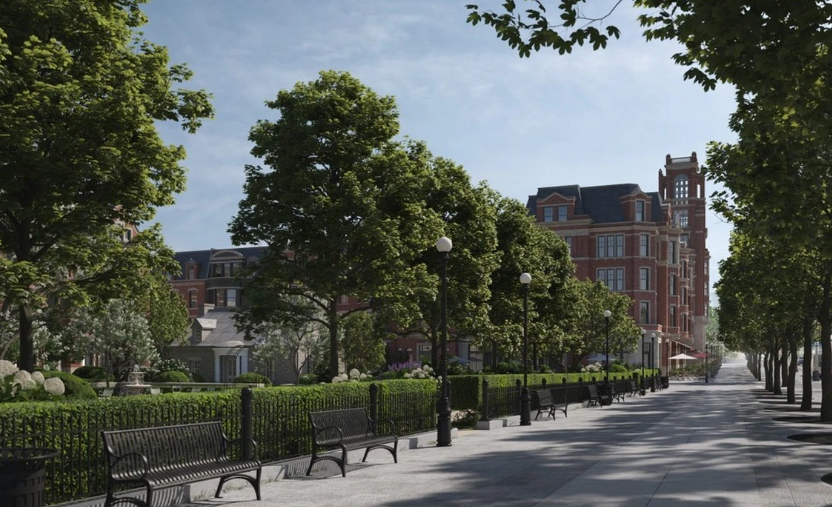
  <p>The NCC's Sussex proposal has become a flashpoint, but much of the conversation surrounding it has tipped into moral panic. The proposal, as described, is not radical: a development of no more than five storeys, with underground parking and design guidelines to ensure it fits with the surrounding streetscape. The notion that this represents an existential threat to the neighbourhood borders on fantasy. It may change the skyline slightly; it will not erase the character of the area. What it will do is bring more people within walking distance of Beechwood — something nearly everyone agrees the street desperately needs.</p>

<div class="development-renderings">
   
  <div class="row">
    <!-- First rendering -->
    <div class="col-md-6 mb-4">
      <figure class="rendering-figure">
        <img src="/assets/img/sussex-blocks.png" alt="NCC renderings of proposed Sussex Blocks development across the street from the Embassy of France" class="img-fluid rounded shadow-sm" />
      </figure>
    </div>
    <div class="col-md-6 mb-4">
      <figure class="rendering-figure">
        <img src="/assets/img/sussex-blocks2.png" alt="Rendering of proposed Sussex Blocks development aerial view" class="img-fluid rounded shadow-sm" />
      </figure>
    </div>
  </div>
  
  <p class="rendering-credit text-center mt-2">
    <small>NCC renderings of proposed Sussex Blocks development across the street from the Embassy of France</small>
  </p>
</div>

<style>

.rendering-figure {
  margin: 0;
  text-align: center;
}

.rendering-figure img {
  width: 100%;
  height: auto;
  border: 1px solid #ddd;
  transition: transform 0.3s ease;
}

.rendering-figure img:hover {
  transform: scale(1.01);
}

.rendering-caption {
  font-size: 0.9rem;
  color: #666;
  font-style: italic;
}

.rendering-credit {
  font-size: 0.85rem;
  color: #777;
}

.rendering-credit small {
  font-size: 0.85rem;
}

/* Responsive adjustments */
@media (max-width: 768px) {
  .development-renderings {
    padding: 0.5rem;
  }
  
  .rendering-caption {
    font-size: 0.85rem;
  }
  
  .rendering-credit {
    font-size: 0.8rem;
  }
}
</style>

 <p>Part of the resistance to development often takes the form of what could be called aesthetic moralism: the belief that visual harmony or historical continuity should always outweigh social need. There is a certain comfort in speaking about "village feel" or "architectural integrity." But those phrases can easily become a polite way of saying, <em>we like things the way they are because they suit us.</em> Maintaining a "look and feel" is not in itself a civic virtue when the cost of doing so is the exclusion of others who cannot afford to live nearby.</p>
  
  <p>In cities across North America and Europe, planners have long warned about this tension. When neighbourhoods freeze development to preserve an imagined past, they inadvertently create the conditions for inequity elsewhere: pushing growth to less wealthy districts, driving up commuting costs, and exacerbating segregation. The same dynamic exists here, even if we prefer not to name it. Each project we block in a well-serviced area like ours must be built somewhere else, usually where land is cheaper and transit less reliable. That's how cities become spatially stratified — wealth in the centre, strain at the edges.</p>
  
  <p>There is also a persistent fallacy in the argument around "green space." The Sussex site, we are told, represents an important natural asset, and that building on it would be a loss to the community. The site is not a park, nor is it used by residents as one. It is a vacant piece of land — an empty plot that contributes little to the environment or to daily life. To describe it as a green space worth preserving is to mistake the appearance of nature for actual ecological or communal value. The same could be said of several empty lots along Beechwood, held up as evidence of openness while in reality offering nothing to the public realm. There is a kind of moral convenience in calling emptiness "green." It allows us to feel virtuous while refusing change.</p>
  
  <p>In the larger historical frame, this pattern carries echoes of something older. The logic that underpins many of our modern ideas about preservation — the belief that land must be protected from human habitation in order to be "cared for" — is the same logic that justified the creation of Canada's first national parks. Those parks were established by displacing Indigenous communities under the pretext that the state could be a better steward of their territories. The impulse to protect land <em>from</em> people rather than <em>for</em> people has deep colonial roots. Today's heritage and planning debates are not equivalent to that history, but they rhyme with it in unsettling ways. When we insist that certain spaces are too special for ordinary living, we risk repeating a moral hierarchy about who belongs and who must remain outside.</p>
  
  <p>None of this means development should happen without conditions or scrutiny. Cities can and must set guardrails to ensure new housing contributes to, rather than erodes, local character. Many have done so successfully. Form-based codes, height limits, façade continuity, and requirements for active ground-floor uses — cafés, shops, or community spaces — can preserve a neighbourhood's feel while allowing it to grow. Design review can be used as a tool of quality, not delay. These mechanisms exist precisely to reconcile progress with preservation.</p>
  
  <p>When we oppose development out of fear rather than principle, we also rob ourselves of the chance to shape it meaningfully. Instead of setting terms — insisting on good design, accessible pricing, public realm improvements — we default to blanket resistance and leave the conversation at "no." In doing so, we abandon the opportunity to make projects better, to insist on beauty, affordability, and sustainability all at once.</p>
  
  <p>If the goal is a thriving main street, more walkable neighbourhoods, and a sense of community that endures, then population density is not the enemy: it is the precondition. Beechwood will not come back to life through wishful thinking or the next round of small business grants. It will come back to life when there are enough people nearby to make it hum from morning to night. Every café, dry cleaner, florist, and bookshop depends on the steady rhythm of nearby homes. Without them, no amount of aesthetic coherence will make a street thrive.</p>
  
  <p>What is at stake here is not just one plot of land or one proposed building, but a broader vision of what kind of community we want to be. A city that treats heritage as a living legacy, not a museum exhibit, must make room for people — people of different incomes, ages, and stories.</p>
  
  <p>The NCC's Sussex development is not perfect. No development is. But it offers us an opportunity to practice what we claim to value: thoughtful design, environmental responsibility, and community vitality. The alternative — preserving emptiness in the name of purity — only ensures that our main street remains quiet, our population stagnant, and our moral imagination small.</p>
  
  <p>We can, if we choose, design our way through this. We can set clear expectations for aesthetics, scale, and public benefit, and still say yes to growth. We can protect what is truly beautiful while acknowledging that beauty loses meaning when it excludes human life. And perhaps most importantly, we can look inward — at the fears, habits, and privileges that shape our reflex to say no — and begin to reimagine stewardship not as protection from others, but as invitation to them.</p>
  
  <p>Because the truth is this: a lively Beechwood and a fairer Ottawa are not separate goals. They are the same.</p>

  <div class="author-bio">
    <p><strong>Sharon Nyangweso</strong> is the Managing Editor of New Edinburgh News and the Owner and CEO of QuakeLab, a consulting agency focusing on strategic communications and community engagement.</p>
  </div>
</div>]]></content><author><name>Sharon Nyangweso</name></author><category term="Housing" /><summary type="html"><![CDATA[]]></summary></entry><entry><title type="html">January Newsletter</title><link href="https://strongtownsottawa.ca/2026/01/05/January-Newsletter.html" rel="alternate" type="text/html" title="January Newsletter" /><published>2026-01-05T00:00:00+00:00</published><updated>2026-01-05T00:00:00+00:00</updated><id>https://strongtownsottawa.ca/2026/01/05/January-Newsletter</id><content type="html" xml:base="https://strongtownsottawa.ca/2026/01/05/January-Newsletter.html"><![CDATA[<iframe id="newsletter-iframe" src="https://eomail5.com/web-version?p=1600ee10-d6d6-11f0-a9b2-51f3f0bf799e&amp;pt=campaign&amp;t=1767627724&amp;s=3637db7f0ff911023d38ee57a17879b08517068ef0236fb4f0125159eb26a37b" width="100%" frameborder="0" style="border: none; background: transparent; display: block;" scrolling="no" onload="resizeIframe(this)"></iframe>

<script>
function resizeIframe(iframe) {
  iframe.style.height = '6800px'; // Desktop-specific adjustment (Always adjust desktop first, once you find the correct height adjust for mobile below)
    setTimeout(function() {
    try {
      // Attempt to get dynamic height (may fail due to cross-origin-resource-sharing limitations)
      const height = iframe.contentWindow.document.body.scrollHeight;
      if (height > 100) { 
        iframe.style.height = height + 'px';
      }
    } catch (e) {
    
      console.log('Could not auto-detect height, using fallback');
    }
  }, 500);

  
  if (window.innerWidth <= 768) {
    iframe.style.height = '8750px'; // Mobile-specific adjustment (Usually 33% bigger than Desktop)
  }
}


function handleResize() {
  const iframe = document.getElementById('newsletter-iframe');
  if (iframe) {
    iframe.style.height = '100px';
    resizeIframe(iframe);
  }
}

window.addEventListener('resize', handleResize);
window.addEventListener('orientationchange', handleResize);
</script>]]></content><author><name>Etienne Lefebvre</name></author><category term="Newsletter" /><summary type="html"><![CDATA[]]></summary></entry><entry><title type="html">Is Keeping Taxes Low Affordable?</title><link href="https://strongtownsottawa.ca/2025/12/09/is-keeping-taxes-low-affordable.html" rel="alternate" type="text/html" title="Is Keeping Taxes Low Affordable?" /><published>2025-12-09T22:41:00+00:00</published><updated>2025-12-09T22:41:00+00:00</updated><id>https://strongtownsottawa.ca/2025/12/09/is-keeping-taxes-low-affordable</id><content type="html" xml:base="https://strongtownsottawa.ca/2025/12/09/is-keeping-taxes-low-affordable.html"><![CDATA[<p>We constantly hear about <strong>affordability</strong> these days, if you’ve been listening to the 2026 Budget talks you’ve probably heard a lot of it. Typically the only topic regarding affordability that is touched on is with regards to property taxes, but is that really the only way our 2026 Budget affects affordability in our city?</p>

<p>We have worked together with other groups as part of the Peoples Official Plan coalition to provide feedback on the upcoming City of Ottawa 2026 Budget. We think that much of the conversation is being missed when focusing so narrowly on “affordability”. From aspects such as housing, transportation, infrastructure maintenance, community services, the environment, and more, <strong>budgets like this proposed one will not make life more affordable for residents of Ottawa.</strong></p>

<p>The letter is included here, and we strongly recommend you contacting your <a href="https://ottawa.ca/en/city-hall/mayor-and-city-councillors">councillor and the mayor</a> to tell them how you feel about the proposed 2026 Budget.</p>

<p>09 December 2025</p>

<p>Ottawa City Council<br />
110 Laurier Avenue W<br />
Ottawa, ON K1P 1J1</p>

<p>RE: Feedback on 2026 Draft Budget</p>

<p>Dear Mayor Sutcliffe and Councillors,</p>

<p>We appreciate the opportunity to comment on the 2026 budget for the City of Ottawa.</p>

<p>At the Peoples Official Plan Coalition (POP) we focus on providing a livable Ottawa for current and future residents. While many factors play a role in livability, such as safety, opportunities for jobs, good transportation, housing options, etc… one of the largest factors is affordability.</p>

<p>POP stands with groups who are working with those residents most marginalized by increased unaffordability in Ottawa, including supporting the budget requests and priorities coming from the <strong>Alliance to End Homelessness</strong>, <strong>CAWI-IVTF</strong>, and the <strong>Ottawa Community
Food Partnership</strong>, all noting the need to prioritize the specific municipal responsibilities and levers to ensure affordable housing, transportation, and food.</p>

<p>POP additionally feels it is important to address middle class homeowners in Ottawa, and how the conversation on affordability in the City’s budget only looks at the immediate impact of taxes on residents. While this is obviously an important aspect, it only speaks to a small part of the bigger picture of affordability.</p>

<p>As per the City of Ottawa’s 2026 Budget Magazine, the proposed increase will result in “an average property tax bill increase of <strong>$166</strong> for urban homeowners and <strong>$108</strong> for rural homeowners.” This is certainly not a small amount by any means, but we would like to zoom out a bit and see how this compares to the costs that residents will bear due to underfunded services on which they rely. For reference, the $166 for urban homeowners would work out to approximately <strong>7$ a month</strong> per person in a household with 2 breadwinners.</p>

<p>One of the largest costs for families is <strong>transportation</strong>, car ownership is costing the average Canadian about <strong>$16,000/year per car</strong>. Many households are forced to purchase and maintain 2 or more vehicles due to their lack of alternative options. Our under-investment into alternative transportation modes such as public transit, safe cycling, and pedestrian infrastructure has forced residents to rely on the most expensive form of transportation
available. Even if they don’t own a car, unreliability in our transit system often leads to payinghigh prices for Ubers. These are costs that our residents wouldn’t have to bear if they were given safe, reliable, and effective transportation alternatives.</p>

<p>The largest expense in the lives of residents is <strong>housing</strong>. We are saddened to see that the amount the city will be contributing to building affordable housing has <strong>dropped by over $6 million dollars</strong> since 2024. We need both market and non-market solutions to help alleviate this housing crisis we face. Adding more non-market housing will help bring down prices for those who are living in market housing as well. By giving residents more options we are ensuring that they are able to continue contributing to the vibrant city that we live in.</p>

<p>A budget oriented toward affordability would invest deeply into <strong>climate resiliency</strong>. The climate resiliency strategy that Council recently passed, Climate Ready Ottawa (CRO), outlines numerous threats posed by climate change as well as their consequences. To take one example: severe Ottawa River flooding in 2017 and 2019 resulted in <strong>$2.6 million in direct costs</strong> to the City of Ottawa and <strong>$223 million in insured damages</strong> in eastern Ontario and western Quebec. This is to say nothing of uninsured damages, or unquantified effects on life and wellbeing. Similarly, the 2022 derecho incurred damages of <strong>$24.1 million to the City</strong> and <strong>$720 million in insurance claims</strong>. The draft budget doesn’t mention CRO, nor whether the City is funding the mere $5 million per year requested for its proposed actions that strengthen resiliency from <strong>other effects of climate change, whether extreme heat, drought, disease, or wildfire smoke</strong>. And investments in resiliency yield substantial returns, as prevention typically does: as CRO describes, “Environment and Climate Change Canada estimates that <strong>every dollar spent on proactive adaptation saves $13 to $15 in avoided recovery costs.</strong>”</p>

<p>Many interventions to increase <strong>environmental sustainability</strong> and reduce GHG emissions also increase affordability, among other goals in Ottawa’s Official Plan. Not only does supporting sustainable transportation modes, such as cycling or transit, reduce transportation costs, they also reduce the health effects of air pollution. Similarly, natural infrastructure—whether preserving natural features like wetlands and forest or building new features like native plantings, rain gardens, and bioswales—is often a fraction of the cost of “grey” infrastructure and also supports the local ecosystem, builds climate resiliency, and strengthens community.</p>

<p>Investing into our <strong>water, wastewater, and stormwater infrastructure</strong> will help ensure that residents do not have to be on the hook for catastrophic outcomes when, inevitably, the next flood happens. We have seen more and more water mains bursting which leads to a worrying trend. Taking care of our existing infrastructure ahead of disaster would mean that residents have peace of mind, and more money in their pocket for other needs. We also need to ensure we are not adding more infrastructure that cannot be maintained, as we are already struggling to make a dent in our long-term infrastructure repairs.</p>

<p>Investing into our city’s <strong>recreational facilities</strong> allows residents to avoid paying hundreds or potentially thousands of dollars a year on keeping themselves or their children active. Being physically active and healthy leads to not only a higher physical quality of life, it leads to improved mental health.</p>

<p>Earlier this year, City Council received a series of <strong>Asset Management Plans</strong> on the state of its infrastructure. The City faces, over the next ten years, a <strong>$10.2 Billion funding shortfall</strong> to maintain and replace its aging equipment and facilities. While the rate supported assets have updated their Long Term Financial Management plans, the <strong>tax supported assets, $6 Billion, have not been accounted for</strong>. The 2026 budget directions did not address these issues. These facilities will continue to get older, be closed for longer, and have their problems worsened. Our budget should be addressing the missing funding for these vital services and infrastructure; <strong>ignoring them will not lead to efficiencies, and kicking the issue down the road will only increase costs to taxpayers in the future.</strong></p>

<p>As you can see there are plenty of costs that residents have to bear when our City does not provide adequate funding for the services they need. Whether it is transportation options, housing options, greenspace, recreational facilities, or any other number of City services provided, all of them are going to cost residents a lot more to find adequate alternatives in the private sector, while still being on the hook for lackluster public options. This ends up giving us the worst of both worlds. If the City of Ottawa can find a budget that allows them to actually meet the needs of residents we are certain that even middle and upper class residents would find a lot of savings. This could come from downsizing to 1 car per household, reducing insurance costs, being able to get a membership at a City gym, rather than a private one, and much more.</p>

<p>Sincerely,</p>

<p>The Peoples Official Plan Coalition</p>

<iframe src="/uploads/2025%2012%2009%20POP%20Letter%20-%20Feedback%20on%202026%20Draft%20Budget.pdf" width="100%" height="600px" style="border: none;"></iframe>]]></content><author><name>Marko Miljusevic</name></author><category term="Finances" /><summary type="html"><![CDATA[We constantly hear about affordability these days, if you’ve been listening to the 2026 Budget talks you’ve probably heard a lot of it. Typically the only topic regarding affordability that is touched on is with regards to property taxes, but is that really the only way our 2026 Budget affects affordability in our city?]]></summary></entry><entry><title type="html">December Newsletter</title><link href="https://strongtownsottawa.ca/2025/12/02/December-Newsletter.html" rel="alternate" type="text/html" title="December Newsletter" /><published>2025-12-02T00:00:00+00:00</published><updated>2025-12-02T00:00:00+00:00</updated><id>https://strongtownsottawa.ca/2025/12/02/December-Newsletter</id><content type="html" xml:base="https://strongtownsottawa.ca/2025/12/02/December-Newsletter.html"><![CDATA[<iframe id="newsletter-iframe" src="https://eomail5.com/web-version?p=387e4044-cd7d-11f0-966b-7da0ce78ee0b&amp;pt=campaign&amp;t=1764640436&amp;s=13727c3908ae6289684d61b11b0a60ba02bfc5be7349c85a4f7374e669e92276" width="100%" frameborder="0" style="border: none; background: transparent; display: block;" scrolling="no" onload="resizeIframe(this)"></iframe>

<script>
function resizeIframe(iframe) {
  iframe.style.height = '6800px'; // Desktop-specific adjustment (Always adjust desktop first, once you find the correct height adjust for mobile below)
    setTimeout(function() {
    try {
      // Attempt to get dynamic height (may fail due to cross-origin-resource-sharing limitations)
      const height = iframe.contentWindow.document.body.scrollHeight;
      if (height > 100) { 
        iframe.style.height = height + 'px';
      }
    } catch (e) {
    
      console.log('Could not auto-detect height, using fallback');
    }
  }, 500);

  
  if (window.innerWidth <= 768) {
    iframe.style.height = '11600px'; // Mobile-specific adjustment (Usually 33% bigger than Desktop)
  }
}


function handleResize() {
  const iframe = document.getElementById('newsletter-iframe');
  if (iframe) {
    iframe.style.height = '100px';
    resizeIframe(iframe);
  }
}

window.addEventListener('resize', handleResize);
window.addEventListener('orientationchange', handleResize);
</script>]]></content><author><name>Etienne Lefebvre</name></author><category term="Newsletter" /><summary type="html"><![CDATA[]]></summary></entry></feed>